If you are choosing a retail location in Newtown, the biggest mistake is treating every available space like it serves the same customer. In reality, Newtown offers a few very different retail environments, and the right fit depends on how your business gets found, how long customers stay, and how much parking and access you need. If you understand those tradeoffs before you sign, you can make a smarter decision for both daily operations and long-term growth. Let’s dive in.
Newtown Is Not One Retail Pattern
When people say “Newtown,” they often blend together Newtown Borough and Newtown Township. For retail site selection, that distinction matters.
Newtown Borough is a small, historic municipality with 2,268 residents in just 0.6 square miles. The larger surrounding market is Newtown Township, which had 19,895 residents in 2020 and provides much of the area’s modern, auto-oriented retail fabric.
The customer base is also stronger than many small-town labels suggest. Census data for Newtown Township shows a median household income of $147,617, while Bucks County reported $14.9 billion in retail sales in 2022. That means Newtown functions as more than a hyperlocal convenience market.
State Street Fits Walkable Retail
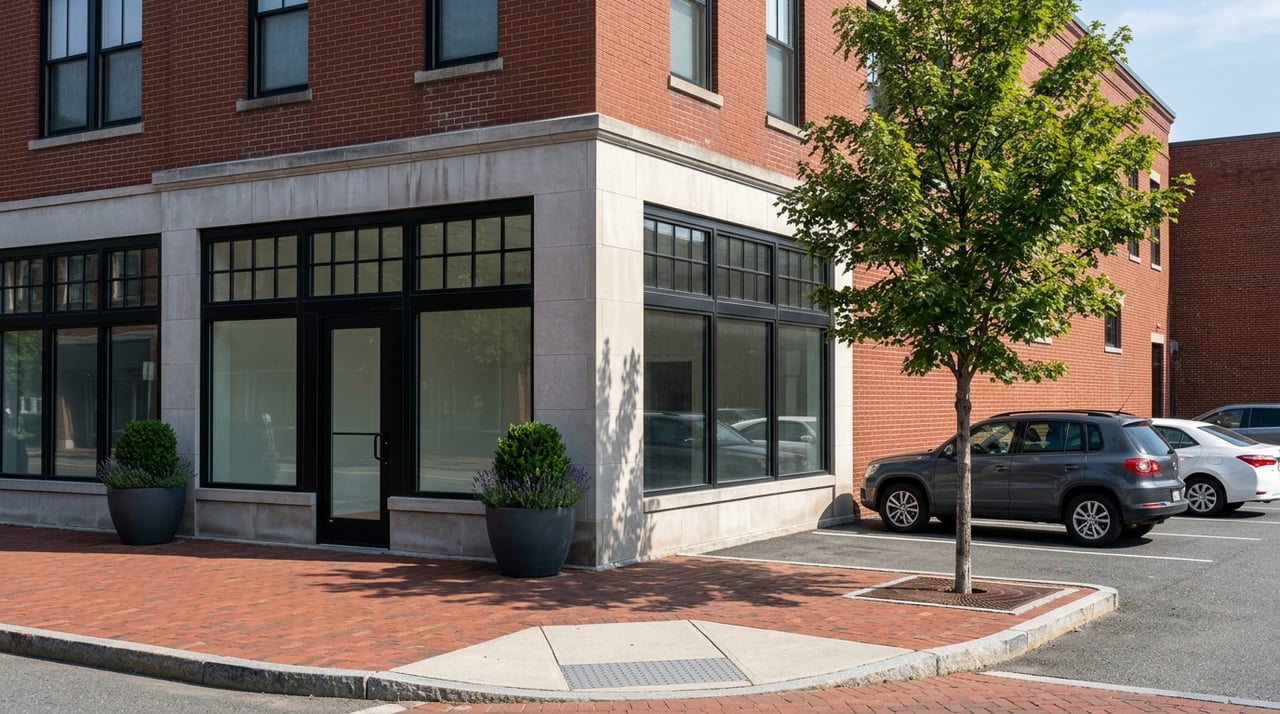
If your concept depends on visibility, browsing, and a strong downtown setting, State Street is usually the first place to consider. The borough’s comprehensive plan identifies the commercial core primarily along State Street, and the corridor remains the area’s clearest main street environment.
According to the borough’s comprehensive plan, downtown shopping and dining are concentrated between Washington and Penn. The 2024 walkability study describes State Street as a two-way route with one lane in each direction, a 25 mph setting, active sidewalks, on-street parking, and frequent pedestrian crossings.
That setup supports businesses that benefit from being discovered on foot. It also supports concepts that gain value from neighboring uses and the credibility of a historic downtown address.
What Works Best on State Street
State Street tends to favor:
- Boutique retail n- Food and beverage concepts with strong walk-in appeal
- Personal care and wellness uses
- Specialty shops that benefit from comparison shopping
- Service businesses that want a customer-facing downtown identity
The current borough business directory shows a dense mix of restaurants, coffee, boutiques, apparel, salons, wellness, banking, hardware, fitness, and professional services. That co-tenancy matters because customers already expect variety there.
The Main Tradeoff on State Street
The biggest tradeoff is parking. State Street offers strong exposure, but it is less forgiving for businesses that need long visits, heavy employee parking, or easy in-and-out vehicle access.
The borough’s visitor information notes that time limits on State Street, Washington Avenue, Centre Avenue, and Penn Street vary from 30 minutes to two hours, while municipal lots are generally limited to three hours on weekdays. There are no parking restrictions on Sundays, but weekday operations still need to be planned carefully.
In plain terms, strong visibility does not automatically mean strong operational fit. A retailer with quick-turn customers may do well here, while a use that depends on longer stays could feel friction quickly.
Side Streets Offer Downtown Adjacency
Not every business needs the highest-pedestrian block to succeed. For some users, Newtown’s secondary streets can offer a better balance between downtown presence and smoother day-to-day operations.
The borough’s comprehensive plan identifies Washington Avenue, South Lincoln Avenue, East Centre Avenue, and Penn Street as additional commercial and industrial areas. These blocks sit close to the core, but they can feel calmer and more flexible than the strongest State Street stretch.
When Side Streets Make Sense
Secondary streets can be a smart option if you want:
- Proximity to downtown without peak pedestrian intensity
- A quieter frontage for appointments or service-based traffic
- A smaller boutique or studio location
- A professional or specialty-service setting near the main street
The borough’s current business listings show uses like coffee, salons, and specialty services on Washington and Centre. That pattern supports the idea that these blocks can work well for businesses that want downtown adjacency rather than pure main-street exposure.
Parking Still Needs Review
Do not assume side streets solve parking automatically. They are still regulated, and posted restrictions apply in several locations near the core.
That is why each site should be tested block by block. You want to understand customer turnover, employee parking options, and access to nearby municipal lots before you commit.
Township Nodes Fit Drive-To Retail
If your business needs larger footprints, easier parking, or more direct vehicle access, Newtown Township is often the stronger choice. This is especially true for destination retail, restaurant uses, and customer-facing businesses that rely more on drive-to traffic than strolling foot traffic.
Because Newtown Borough is nearly built out, larger-format retail is naturally more likely to fit in township nodes. These locations serve a different operating model than the historic core.
Village at Newtown for Destination Retail
The clearest example is Village at Newtown at 2800 South Eagle Road. Brixmor describes it as a 226,829-square-foot center with more than 3.7 million annual visits and visibility to 15,000 or more vehicles per day on North Sycamore Street.
That kind of environment is better aligned with businesses that need:
- Larger floor plates
- Strong vehicle visibility
- Easier parking fields
- Regional customer draw
- Co-tenancy with national and regional retailers
For many retailers, this is less about charm and more about throughput. If your business depends on convenience and broad reach, that can be a major advantage.
Newtown Business Commons for Service Uses
The Newtown Business Commons offers a different kind of opportunity. The association says the Commons is near major highways, has ample parking, includes more than 200 businesses, and supports roughly 5,500 to 6,000 workers.
This setting is especially relevant for service businesses that benefit from daytime demand, business adjacency, and easy access. It is not the same as a traditional retail street, but it can be highly effective for operators who care more about convenience, workforce access, and nearby business traffic than a classic storefront atmosphere.
Match the Location to Your Business Model
The right Newtown retail location starts with how your business actually operates. A beautiful storefront can still be the wrong real estate decision if customer behavior and site logistics do not line up.
A useful way to evaluate your options is to focus on five questions:
1. How do customers find you?
If discovery happens through foot traffic, browsing, and neighboring shops, State Street deserves serious attention. If customers usually drive to you with clear intent, township nodes may be more effective.
2. How long do customers stay?
Short visits fit better in areas with tighter curb management. Longer dwell times raise the importance of lot access, parking duration, and employee vehicle planning.
3. How important is brand setting?
Some businesses benefit from the identity of a historic downtown address. Others gain more from convenience, size, and ease of access than from a main street atmosphere.
4. What footprint do you need?
If your concept needs a larger layout, significant storage, broad frontage, or easier loading, Newtown Township will usually give you more flexibility. The borough’s physical constraints matter.
5. What daily friction can you tolerate?
A site can look excellent on paper and still create problems in real life. Parking rules, traffic flow, pedestrian crossings, and customer convenience should be tested as operating variables, not just leasing details.
Why Parking Should Be Its Own Analysis
In Newtown, parking is not a minor box to check. It is a separate decision factor that can shape sales, staffing, and customer experience.
The borough’s current parking system includes municipal lots, block-specific restrictions, and weekday duration limits. That means a location may have strong street presence but still fall short if your use depends on longer appointments, repeat stops, or consistent employee parking.
This is one reason many tenants and landlords benefit from a more operational view of site selection. Real estate is not just about where the space sits. It is about whether the space supports the way your business actually runs.
A Smarter Way to Choose in Newtown
Newtown offers real retail opportunity, but it does not offer one-size-fits-all retail real estate. State Street gives you walkability, co-tenancy, and historic identity. Side streets offer downtown access with a calmer setting. Township nodes give you scale, parking, and stronger drive-to convenience.
The best location is the one that matches your customer journey, visit duration, parking needs, and operating model from day one. If you want help evaluating retail space in Newtown with those business realities in mind, connect with Commercial Partners Serhant for practical guidance rooted in local market knowledge and execution.
FAQs
What is the best retail area in Newtown for walk-in customer traffic?
- State Street in Newtown Borough is typically the strongest fit for walk-by discovery, comparison shopping, and a traditional downtown retail setting.
What retail areas in Newtown are better for easy parking?
- Township locations such as Village at Newtown and areas near Newtown Business Commons are generally better suited for businesses that need more parking and easier vehicle access.
Are side streets near State Street good for retail businesses in Newtown?
- Yes, streets such as Washington Avenue and East Centre Avenue can work well for smaller boutiques, studios, and service businesses that want to be near downtown without relying on the highest pedestrian volume.
Why does parking matter so much when choosing a retail space in Newtown?
- Parking affects customer convenience, visit length, employee access, and daily operations, especially in the borough where curb limits and municipal lot rules are actively managed.
Is Newtown Borough or Newtown Township better for larger retail spaces?
- Newtown Township is usually the better fit for larger-format retail because the borough is nearly built out and has more physical and parking constraints.