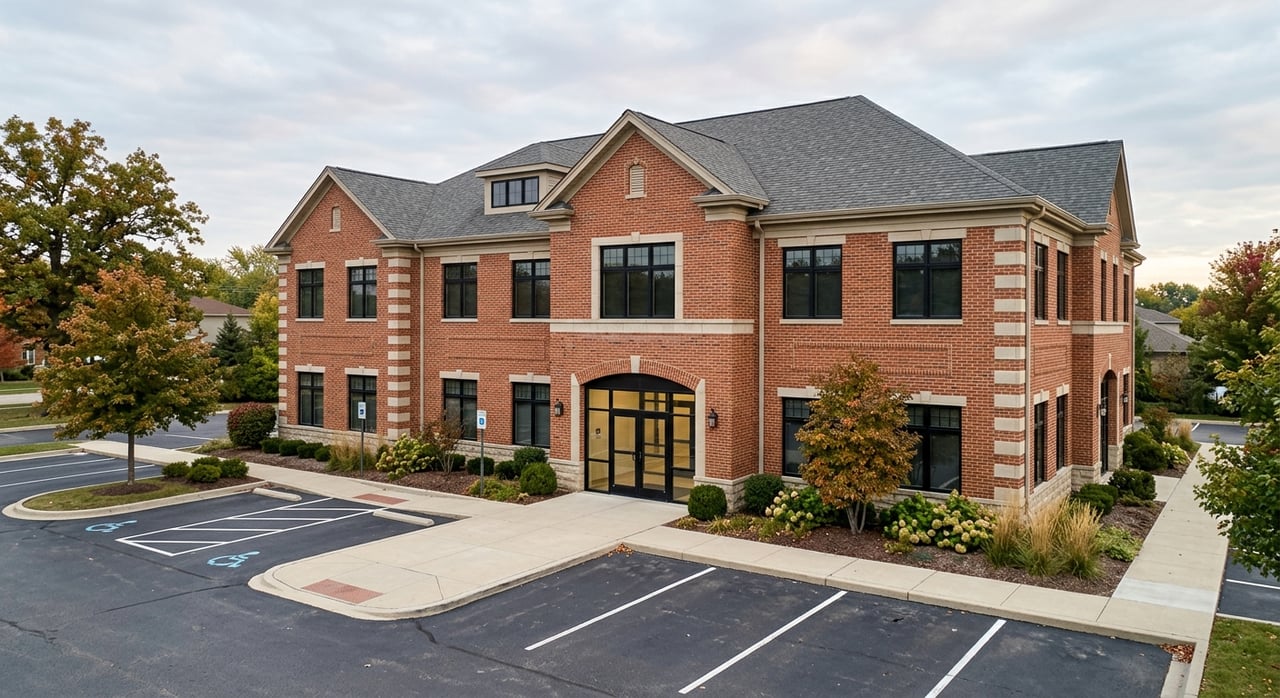
If you are thinking about buying a medical office condo in Langhorne, the sticker price is only part of the story. For many practice owners and wellness operators, the real question is whether a specific condo supports your operations, your patients, and your long-term occupancy costs. This guide walks you through what to evaluate in Langhorne, what numbers matter most, and where buyers can get tripped up before closing. Let’s dive in.
Langhorne's Medical Condo Market
Langhorne’s medical office condo market is concentrated in Lower Bucks County, especially around St. Mary Medical Center at 1201 Langhorne-Newtown Road and the broader network of medical and office buildings along Langhorne-Newtown Road, Town Center Drive, Corporate Drive, Oxford Valley Road, and the Oxford Valley corridor.
That matters because many buyers are not just choosing a suite. You are also choosing access, referral patterns, employee commute convenience, and regional visibility. Recent listings also highlight connectivity to Route 1, I-95/295, the PA Turnpike, Route 413, and SEPTA stations in Woodbourne and Yardley, which points to a market that serves a wider owner-user base rather than only immediate neighborhood traffic.
Common Medical Condo Types
Langhorne offers a mix of medical condo formats, and each one creates a different ownership experience. Recent examples include one-story office condo buildings, multi-tenant medical office buildings, class A medical campuses, and highly specialized former surgical space.
In practical terms, that means one suite may be close to move-in ready for a standard office user, while another may need substantial work to fit a medical or wellness use. Recent inventory has included buildings such as a 20,000-square-foot one-story medical office condo building at 360 Middletown Boulevard, a 10,000-square-foot office condo building at 105 Corporate Drive East, a 27,864-square-foot class A medical building at 825 Town Center Drive, and a 32,500-square-foot medical building at 3 Cornerstone Drive with former surgical-center improvements.
Typical Suite Sizes
Suite sizes in recent Langhorne listings have ranged widely. Smaller offices have been listed from 873 to about 1,500 square feet, while many spaces in the St. Mary corridor have fallen between 1,482 and 2,100 square feet.
For buyers who need more room, owner-user condo examples have included suites around 2,071 and 2,880 square feet, while larger campus offerings have ranged up to 12,917 square feet. That range gives you options, but it also means your search should start with workflow, staffing, treatment-room needs, and growth plans instead of just budget.
Parking Can Make Or Break It
Parking is one of the most important filters when evaluating medical office condos in Langhorne. Middletown Township requires at least one off-street parking space per 200 square feet of total floor area for office buildings and medical, dental, and clinic uses.
Some listings exceed that baseline by a wide margin. Recent examples included 20.83 spaces per 1,000 square feet at 105 Corporate Drive East and 24 surface spaces for a 1,500-square-foot unit at 607 Corporate Drive West.
That sounds straightforward, but buyers should not stop at the ratio shown in a brochure. You need to confirm whether parking is shared, reserved, or deeded, and whether patient traffic, staff overlap, or neighboring users could create peak-hour bottlenecks.
Price Per Square Foot Is Not Enough
Recent Langhorne owner-user condo listings were asking roughly $112.85 to $196.67 per square foot. Lease listings, by comparison, showed asking rents around $22 to $37 per square foot per year.
It may be tempting to compare those numbers and assume buying is the better deal. In reality, the buy-versus-lease decision depends on your financing structure, condo dues, reserve needs, build-out costs, and the risk of future special assessments.
Ownership often appeals to operators who want control, stable occupancy, and equity build-up over time. Leasing may fit practices that want flexibility or lower upfront capital needs.
Condo Fees Need A Closer Look
Condo dues in this market can vary more than many buyers expect. Local examples ranged from $193 per month in a nearby condo where the fee included water, sewer, outside maintenance, insurance, trash, landscaping, snow removal, and parking-lot maintenance, to $964 per month at 105 Corporate Drive East, where the fee covered common area maintenance and common area insurance.
That difference is why you should never evaluate a medical condo on asking price alone. Two suites with similar square footage can have very different carrying costs depending on what the association maintains, how utilities are allocated, and whether limited common elements are charged separately.
Under Pennsylvania law, associations can assess common expenses, reserves, and special allocations. That means your monthly cost structure may be materially different from another buyer in the same building.
What To Review Before You Buy
The most important due diligence in a Langhorne medical condo deal usually falls into four buckets: association review, financing, build-out review, and zoning confirmation.
If even one of those pieces is overlooked, a deal that looked efficient on paper can become expensive after closing. A disciplined review process helps you compare opportunities on a true apples-to-apples basis.
Review The Condo Documents
Pennsylvania’s Uniform Condominium Act is central to these transactions. The declaration controls unit boundaries and limited common elements, budgets must disclose reserves and projected monthly common expense assessments, and the resale certificate must state the monthly common expense assessment plus any unpaid common or special assessments.
This is not just legal fine print. It tells you what you actually own, what the association controls, and what future costs may land on your balance sheet.
Pennsylvania law also makes the purchase contract voidable until the resale certificate has been delivered and for five days after delivery or until closing, whichever comes first. In addition, each unit is separately taxed and assessed.
Ask Better Lender Questions
If you plan to finance the purchase, ask the lender how the condo will be underwritten and whether it fits an owner-user commercial real estate structure. You should also ask whether SBA 504 or 7(a) financing is a possible fit and how condo dues, reserves, and any special assessments will affect debt-service coverage.
SBA 504 loans can provide long-term, fixed-rate financing for major fixed assets and may be used for existing buildings, new facilities, land, parking lots, landscaping, and improvements to existing facilities. The current SBA 504 program information lists a maximum loan amount of $5.5 million and maturities of 10, 20, and 25 years.
For owner-users, occupancy requirements matter. The SBA 504 application requires an existing-building project to be at least 51% occupied by the applicant or operating company, while new-building projects with rental space must be 60% occupied immediately and more than 80% occupied within 10 years.
Verify The Build-Out Condition
Not every medical condo in Langhorne is being delivered in the same condition. Recent listings have shown former surgical suites, partially built-out medical space, and vanilla-shell space with capped plumbing.
That difference can dramatically affect your budget and timeline. Before you underwrite a deal, have a contractor determine whether the suite is a shell, a standard office layout, or a specialty medical build-out.
The contractor should also confirm staging, after-hours access, and any association rules for repairs or renovations in common areas. Pennsylvania law gives unit owners a nonexclusive easement through common elements for construction, repair, and renovation, but the practical rules still need to be confirmed building by building.
Confirm Zoning Early
Before you commit to a specific property, confirm the zoning district and permitted use with Middletown Township. One recent Langhorne listing in the Luxembourg Corporate Center described its zoning as Office Campus District, which allowed a wide range of professional uses.
That does not mean every building or suite will fit your intended use without question. Zoning should be checked early so you do not spend time and money on legal review, design, and financing for a space that does not line up with your operating plan.
A Practical Evaluation Checklist
If you are comparing multiple medical condos in Langhorne, use a simple checklist to keep your review focused:
- Confirm the exact suite size and layout efficiency
- Review parking count and parking rights
- Compare monthly condo dues and what they include
- Ask about reserves, transfer charges, and special assessments
- Verify what is inside the unit boundary
- Confirm who handles exterior maintenance and insurance
- Review build-out condition and renovation rules
- Check whether your use is permitted under current zoning
- Ask your lender how dues and assessments affect underwriting
- Compare total occupancy cost, not just asking price
Why Local Guidance Matters
Medical office condos are not generic office deals. In Langhorne, the right purchase depends on location within the corridor, building condition, parking functionality, association structure, and how the property supports your day-to-day operations.
That is why experienced local guidance can make the process more efficient. A strong advisor helps you compare real costs, ask sharper diligence questions, and avoid overpaying for a suite that looks good online but does not work in practice.
If you are evaluating medical office condos in Langhorne, SCRE PA, LLC d.b.a. Commercial Partners Serhant can help you assess options, compare lease-versus-buy economics, and navigate the details that matter before you commit.
FAQs
What size medical office condos are common in Langhorne?
- Recent Langhorne listings have ranged from about 873 square feet for smaller offices to more than 12,000 square feet in larger medical campus settings, with many owner-user opportunities falling between roughly 1,500 and 3,000 square feet.
What parking requirement applies to medical office space in Middletown Township?
- Middletown Township requires at least one off-street parking space per 200 square feet of total floor area for office buildings and medical, dental, and clinic uses.
What should you review in a Pennsylvania medical condo resale certificate?
- The resale certificate should state the monthly common expense assessment and any unpaid common or special assessments, which helps you understand recurring costs and outstanding liabilities before closing.
What makes condo fees vary between Langhorne medical office buildings?
- Condo fees can vary based on what the association maintains, reserve funding, insurance allocation, utility structure, and whether certain limited common elements or special costs are allocated differently.
What financing questions matter when buying a Langhorne medical office condo?
- You should ask whether the property will be underwritten as owner-user commercial real estate, whether SBA 504 or 7(a) financing may apply, and how condo dues, reserves, and special assessments affect debt-service coverage.
Why should you confirm zoning before buying a medical condo in Langhorne?
- Zoning confirmation helps ensure your intended medical or professional use is permitted in that specific township district before you invest time and money in design, financing, and closing.