If you need a space that can handle office work, light warehouse activity, and day-to-day operations without pushing you into a full-scale logistics property, Warminster may be worth a close look. For many business owners, the challenge is not just finding square footage. It is finding a location that fits how your company actually runs, serves customers, and grows. This guide will help you understand where Warminster fits in the Bucks County flex market and whether it lines up with your operational needs. Let’s dive in.
Why Warminster stands out
Warminster is not an isolated flex pocket. It sits in central Bucks County, about 20 miles north of Center City Philadelphia, and borders Montgomery County. According to township and county planning sources, Warminster has more than 32,000 residents, more than 900 commercial businesses, and a meaningful concentration of industrial land near Route 413, Route 611, Route 263, County Line Road, and Street Road.
That matters because flex markets work best when they are part of a broader business cluster. Warminster’s planning documents describe roughly 15 contiguous industrial parks across Warminster, Ivyland, Warwick, and Northampton. For tenants and owner-users, that creates a more established operating environment than a one-building or one-corridor market.
What kind of flex space Warminster offers
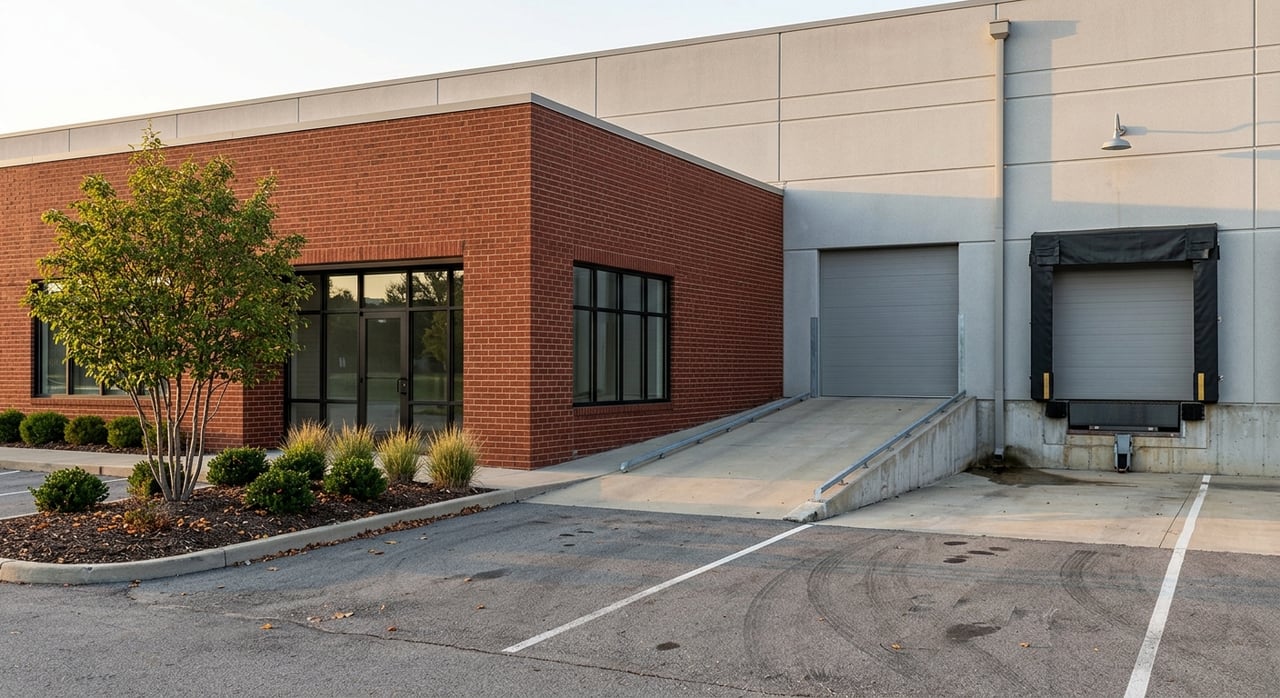
Warminster’s inventory points to a true flex market, not a one-size-fits-all warehouse market. Current examples in the area include smaller and mid-sized spaces with office components, drive-in access, loading docks, and clear heights that vary quite a bit from building to building. That gives you options, but it also means you need to match the building carefully to your use.
The local stock ranges from practical low- to mid-clear buildings to select newer product with significantly higher clear heights. Some active examples show clear heights in the 12- to 18-foot range, while at least one listing advertises 36-foot clear height and substantial loading capacity. In plain terms, Warminster can support a broad set of business types, but not every building will work for every user.
Common building features you may find
Based on current listings, flex users in Warminster may come across features such as:
- Office and warehouse combinations
- Drive-in doors
- Dock loading
- One-story multi-tenant buildings
- Masonry and steel construction
- Mezzanine space in selected units
- Small- to mid-bay configurations
For many businesses, that is a strong setup for day-to-day operations that blend administration, light storage, service dispatch, shop work, and customer-facing activity.
Best-fit businesses for Warminster flex space
If your business needs a polished but practical operating base, Warminster can make sense. The market appears best suited for companies that need more than office space but less than a regional distribution center. That includes businesses that want a mix of front-office presence and functional back-of-house space.
Strong fit categories include:
- Contractors and trade-related businesses
- Repair and service companies
- Light manufacturing users
- Research and development users
- Wholesale and storage operators
- Office-heavy flex tenants with shop or support space needs
This is especially relevant if your team serves central Bucks County and surrounding suburban markets. A Warminster location can support customer access while still giving you the utility of industrial-style space.
Zoning can support multiple use types
One of Warminster’s strengths is that its zoning framework clearly recognizes both industrial and flex-style occupancy. The township separates its I Industrial District from its I-O Industrial-Office District. That gives users and property owners a clearer starting point when evaluating whether a site may fit a specific operation.
The I Industrial District permits uses such as light manufacturing, research and development, wholesale business and storage, contractor offices and shops, printing, publishing, binding, repair shops, truck terminals, standard self-storage, and fuel storage and distribution. The I-O Industrial-Office District is more flex-oriented and allows office, medical and dental uses, retail shop, service business, restaurant, hotel, light manufacturing, research and development, wholesale business and storage, contractor offices or shops, plumbing shops, carpentry shops, and self-storage.
What that means for you
If you need a space that mixes office, client interaction, and operational support, the I-O district may be especially relevant. Its permitted uses align more closely with office-forward flex occupancy and service businesses. If your operation leans more industrial, the I district may offer a better fit.
That said, permitted use categories are only one part of the decision. You also need to consider parking, loading, access, and the building’s physical setup before assuming a property works for your business.
Site rules that can affect usability
In Warminster, the dimensional rules can shape how industrial and flex properties function. The I district requires a minimum lot area of 1 acre, a minimum lot width of 200 feet, maximum building coverage of 25 percent, maximum impervious surface of 50 percent, a 50-foot front yard, 25-foot side yards, and a 35-foot rear yard.
The I-O district keeps the same lot width and setback structure but allows 35 percent building coverage and 65 percent impervious surface. That can be a better fit for office-forward flex or service-oriented occupancy where site design and parking demand differ from a heavier industrial operation.
There is also a practical loading rule to keep in mind. For facilities over 6,000 square feet, Warminster requires suitable off-street loading, and on-street loading or unloading is prohibited. If your business depends on regular deliveries or service vehicle movement, this is an important checkpoint during site selection.
Access and workforce considerations
A flex location does not work on building specs alone. Your team still needs to get there, and your customers or vendors need reasonable access. Warminster benefits from its suburban location and from SEPTA’s Warminster Line, which connects the township to Center City Philadelphia through stops including Hatboro, Willow Grove, Glenside, and Jenkintown-Wyncote.
That rail connection is a real advantage in a suburban flex market. It can help employers widen the pool of potential workers and offer another commuting option beyond driving. For businesses with office staff, admin teams, or customer-facing personnel, that can be more meaningful than it first appears.
The demographics also paint a useful picture. Warminster’s 2024 population estimate was 33,474, with 62.4 percent of residents age 16 and older participating in the civilian labor force. The township also reported 36.1 percent of residents with a bachelor’s degree or higher, a median household income of $96,391, and a mean travel time to work of 26.5 minutes.
How Warminster compares to nearby markets
Warminster tends to sit in the middle of the local suburban landscape rather than at either extreme. Nearby Warrington shows higher household income and higher educational attainment. Horsham, just across the Montgomery County line, also reflects a deeper and more highly educated labor pool based on Census figures.
At the same time, Bensalem offers a larger population base with different workforce characteristics. That makes Warminster something of a middle-ground market. It can be attractive to owner-users and growing local companies that want central Bucks positioning, but it may not be the first choice for a pure high-bay distribution strategy.
A simple way to think about it
Warminster is a good market to consider if you want:
- Central Bucks County access
- A real industrial park cluster
- Flex-friendly zoning context
- Space for office plus operational use
- Proximity to both Bucks and Montgomery County business activity
- Rail access for part of your workforce
Warminster may be less ideal if you need:
- Consistently high clear heights across all options
- Large trailer courts
- Big-box logistics layouts
- A market built primarily around regional distribution
Questions to ask before choosing Warminster
Before you commit to a Warminster flex property, it helps to pressure-test the fit against your actual operating needs. A space can look good on paper and still create friction if loading, layout, or customer flow does not work in practice.
Ask yourself:
- How much office space do you really need versus warehouse or shop space?
- Do you require dock loading, drive-in access, or both?
- What clear height is the minimum for your storage or equipment?
- Will clients, patients, vendors, or field staff visit the property regularly?
- Does your use align more naturally with an industrial site or an industrial-office setting?
- Do you need central Bucks proximity more than high-bay warehouse functionality?
Those questions can narrow your search quickly. They can also keep you from overpaying for features you do not need or choosing a building that limits your operations later.
So, is Warminster right for you?
If your business needs practical, flexible space in central Bucks County, Warminster is a market you should take seriously. The combination of industrial clustering, mixed building stock, rail access, and zoning that supports both service-oriented and light-industrial users makes it a useful option for many local and regional operators.
If your business model depends on modern high-bay logistics specs across the board, Warminster will require a more selective search. But if you are a contractor, light manufacturer, service business, office-plus-shop user, or owner-user who values customer proximity and operational flexibility, Warminster can be a strong market fit.
If you are weighing flex space options in Bucks County and want a practical view of what fits your business, SCRE PA, LLC d.b.a. Commercial Partners Serhant can help you evaluate location, building type, and next-step strategy with a local, business-first approach.
FAQs
What types of businesses are the best fit for flex space in Warminster?
- Warminster appears best suited for contractors, repair and service businesses, light manufacturers, research and development users, wholesale and storage operators, and office-heavy users that also need shop or warehouse support space.
What zoning districts matter most for flex space in Warminster?
- The two key districts are the I Industrial District and the I-O Industrial-Office District, with the I-O district generally more aligned with office-forward flex and service-oriented uses.
What should you check before leasing or buying a flex building in Warminster?
- You should review clear height, loading configuration, drive-in access, office-to-warehouse ratio, parking, and whether the property layout supports your specific day-to-day operations.
Is Warminster a good location for warehouse distribution users?
- It can work for some distribution-lite users, but the market appears stronger for flexible small- to mid-bay occupancy than for pure high-bay regional logistics.
Does Warminster offer public transit access for employees?
- Yes. Warminster is served by SEPTA’s Warminster Line, which connects the area to Center City Philadelphia through several suburban stations.
Why do business owners consider Warminster for flex space in Bucks County?
- Business owners often look at Warminster because it offers central Bucks County access, a real industrial park cluster, a range of flex building types, and zoning that supports multiple business uses.