If you own an older office property in Doylestown, you are not just competing against the building down the street. You are competing against newer space, better first impressions, and easier day-to-day function. In a market where tenants can be selective, older offices need a sharper plan.
That does not always mean a full gut renovation. In many cases, the better move is a targeted repositioning strategy that reduces leasing friction, improves usability, and gives tenants a polished space they can occupy faster. If you are weighing what to upgrade, what to defer, and how Doylestown rules affect the math, this guide will help you think through the decision. Let’s dive in.
Why older Doylestown offices face pressure
Office fundamentals in the broader Bucks County and suburban Philadelphia market show why repositioning matters. Newmark reported Bucks County at 14.9% vacancy, 20.3% availability, and $26.34 per square foot asking rent in Q3 2025, with negative quarterly absorption of 97,372 square feet. Cushman & Wakefield’s Q4 2025 suburban Philadelphia data showed 22.5% vacancy and 28.5% availability.
Those numbers tell a simple story. Tenants still have choices, and older properties have to work harder to stand out. At the same time, Newmark reported that regional office-using employment grew 2.0% over the 12 months ending August 2025, with Business and Professional Services up 3.4%.
So demand has not disappeared. It has become more selective. That is especially important for landlords in Doylestown, where image, convenience, and speed to occupancy can carry as much weight as base rent.
What today’s tenants want
Modern tenants are often looking for less friction, not more square footage. According to CBRE’s 2025 occupier survey, companies use flexible office space mainly to reduce capital expense, respond to uncertain space needs, and access meeting or collaboration space when they need it.
That preference lines up well with a repositioning strategy for older suburban buildings. A landlord who offers smaller move-in-ready suites, a clean arrival experience, and simple shared functionality may compete more effectively than one trying to imitate a large trophy asset.
CBRE also found that certain amenities have an outsized effect on lease discussions. These include outdoor areas, shared amenity spaces, fitness facilities, sustainability features, EV charging, indoor air quality, shared meeting space, and flexible office options.
In Doylestown, the practical takeaway is not that every building needs a major amenity package. It is that the best improvements usually solve everyday tenant needs first:
- Easy parking
- Clear building entry
- Functional shared meeting space
- Comfortable lighting and acoustics
- Fast move-in readiness
- A professional look that supports tenant image
Why walkability and convenience matter
JLL’s lifestyle office research found that mixed-use, walkable, suburban-accessible office districts command a 32% rent premium, lease up twice as fast, and carry lower vacancy than the broader office market. That is useful context for Doylestown, where the Borough setting can be a real advantage if the property experience feels easy and intentional.
This is where many older assets miss the mark. They may have a good location, but the user experience feels dated or inconvenient. If parking is unclear, signage is weak, or the front entry feels tired, the building can lose ground before a prospect ever tours a suite.
Doylestown Borough’s parking guidance reinforces this point. The Borough notes that businesses can use the county garage for employee parking so closer spaces can remain available for customers. That means parking strategy is not just an operations issue. It is part of the leasing product.
The best repositioning priorities
For many older Doylestown office properties, the highest-return improvements are not the flashiest ones. They are the upgrades that make the building easier to lease, easier to occupy, and easier to understand.
A practical repositioning plan often starts with these areas:
Improve the arrival experience
First impressions matter more in a competitive market. A refreshed lobby, updated common areas, better lighting, stronger signage, and cleaner wayfinding can make an older property feel more current without changing the whole building.
This is often the lowest-disruption path. It also helps tenants picture their business in the space, which matters when they are comparing an older building against newer alternatives.
Create move-in-ready suites
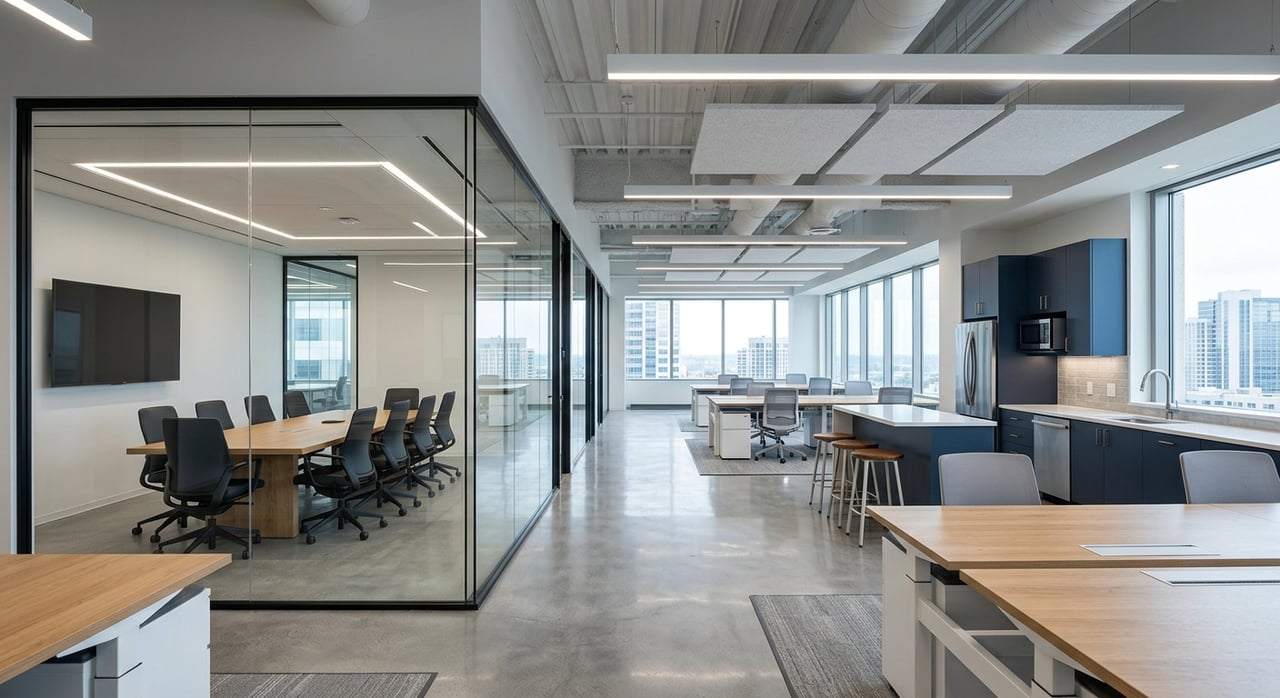
Spec suites can be one of the most effective middle-ground strategies for older suburban offices. Instead of waiting for a tenant to imagine a raw or outdated suite, you give them a small, polished, usable layout that reduces decision fatigue.
That might include:
- A conference room
- A pantry or break area
- Improved acoustics
- Updated lighting
- Basic AV and IT readiness
- A clean, neutral finish package
This approach aligns with occupier demand for flexibility and faster occupancy. It can also broaden the pool of prospective tenants who want a professional setting without a long build-out timeline.
Solve comfort and code issues early
If your building has HVAC, electrical, plumbing, restroom, or accessibility issues, those items can quickly move from background concern to leasing obstacle. Deep repositioning can become expensive fast, especially once systems and technology are involved.
JLL’s 2026 office fit-out guide put a medium-quality corporate office fit-out at an average of $295 per square foot, with a typical range of $230 to $375 per square foot. JLL also noted that MEP and AV/IT can account for 10% to 12% of total fit-out cost in some markets.
That benchmark matters because it shows why project scope has to stay disciplined. Once major systems work enters the plan, the budget can escalate quickly.
Three capital tiers to consider
If you are evaluating an older office asset in Doylestown, it helps to think about repositioning in tiers.
Tier 1: Cosmetic refresh
This is the lightest and often fastest strategy. It usually includes paint, flooring, lighting, common-area updates, signage, and wayfinding.
This tier works best when the building systems are already serviceable and the core issue is presentation. If the space functions reasonably well today, a cosmetic refresh may be enough to improve marketability.
Tier 2: Spec-suite repositioning
This is often the sweet spot for suburban landlords. You create smaller, attractive, move-in-ready suites with practical shared features rather than overhauling the entire property.
For many Doylestown owners, this strategy can improve lease-up while keeping capital exposure more controlled. It addresses what many tenants want right now: flexibility, speed, and a clean professional image.
Tier 3: Deep repositioning
This is the highest-capital path. It may include HVAC, electrical, plumbing, bathrooms, accessibility upgrades, and even site or parking work.
In Doylestown, this tier also needs close attention to Borough process. The Borough’s opening-a-business guidance states that structural changes and alterations such as windows, doors, and bathrooms require building permits. The same guidance advises owners to expect accessibility upgrades when use types change or alterations are added, and it suggests budgeting an additional 20% of project cost to make a space more accessible than it is now.
That does not mean deep repositioning is the wrong move. It means you need to underwrite it carefully and align it with a realistic leasing or exit strategy.
Doylestown parking can make or break feasibility
Parking deserves its own analysis because it affects both leasing and redevelopment decisions. Doylestown Borough’s code requires office uses to provide one parking space per 300 square feet of gross floor area, except in the Central Commercial district.
In the Central Commercial district, no off-street parking is required for the first 400 square feet, and then one space is required for each additional 400 square feet or portion of that area. The code also allows off-lot parking only by special exception within 300 feet, with a practical cap of 30% of required spaces or six spaces, plus durable control of parking rights and directional signage.
For owners, that means parking should be reviewed before major leasing assumptions are made. A repositioning plan may look strong on paper but become harder to execute if suite size, use type, or occupancy intensity creates a parking mismatch.
Timelines depend on more than construction
In Doylestown, leasing timelines are shaped by approvals as much as by renovation work. The Borough’s opening-a-business guidance advises owners and tenants to verify zoning before signing a lease, confirm parking adequacy, obtain use-and-occupancy approval, and secure building permits when needed.
The same guidance notes that sign permits take about two months. That may sound like a small detail, but it can affect opening schedules and occupancy planning. In a competitive leasing environment, delays in signage, permitting, or accessibility review can slow down what otherwise looked like a straightforward deal.
This is why repositioning should be approached as a business plan, not just a construction plan. The best outcomes usually come from coordinating lease strategy, physical improvements, zoning review, and timeline management from the start.
When repositioning may not be enough
Not every older office building should be pushed through the same playbook. In some cases, the best path is lease-up and hold. In others, the building may be better suited for sale to an owner-user, an investor, or a buyer pursuing partial conversion or redevelopment.
Regional trends support keeping those options on the table. CBRE reported that 23.3 million square feet of office space was slated for conversion or demolition in 2025, which exceeded the amount of new construction. Newmark also reported office-to-residential conversions and other creative reuse activity in Greater Philadelphia.
That does not mean every Doylestown office is a conversion candidate. It does mean owners should evaluate repositioning in the context of exit options, parking realities, zoning constraints, and the building’s long-term functional relevance.
A practical Doylestown repositioning framework
If you own an older office building in Doylestown, start with the basics before chasing bigger ideas. In many cases, the highest-return dollars go toward the issues that reduce leasing friction first.
Use this framework as a starting point:
- Review zoning and parking requirements.
- Assess entry, signage, and overall arrival quality.
- Identify whether smaller spec suites could improve leasing velocity.
- Evaluate HVAC, electrical, plumbing, restroom, and accessibility gaps.
- Align scope with a clear hold, lease-up, sale, or redevelopment strategy.
That kind of disciplined approach helps you avoid over-improving the wrong asset or under-improving a building that could still compete well with the right plan.
If you are considering how to reposition an older office property in Doylestown, the goal is not to copy a downtown tower or overspend on amenities that tenants may not value. The goal is to create a product that feels easier, sharper, and more usable for today’s market. For many properties, that means solving parking, arrival, flexibility, and move-in readiness before anything else.
If you want help evaluating lease-up strategy, property positioning, or disposition options for an aging office asset in Bucks County, connect with SCRE PA, LLC d.b.a. Commercial Partners Serhant.
FAQs
What does office repositioning mean for an older Doylestown property?
- It usually means upgrading the building so it better fits current tenant expectations, often through cosmetic improvements, move-in-ready suites, system upgrades, or a revised leasing strategy.
What office upgrades matter most to tenants in Doylestown?
- The most practical upgrades are often clear parking solutions, a polished entry experience, shared meeting space, comfortable lighting and acoustics, and suites that are ready for faster occupancy.
What are Doylestown office parking requirements?
- Doylestown Borough generally requires one parking space per 300 square feet of gross floor area for office use, with different rules in the Central Commercial district.
How expensive can a deeper office repositioning project become?
- JLL’s 2026 fit-out guide lists medium-quality corporate office fit-outs at an average of $295 per square foot, with a typical range of $230 to $375 per square foot, and costs can rise quickly when major systems and technology are involved.
What Doylestown approvals can affect office lease-up timelines?
- Zoning verification, parking review, use-and-occupancy approval, building permits, accessibility requirements, and sign permits can all affect the timeline.
When should a Doylestown owner consider selling instead of repositioning?
- If the building has major functional issues, difficult parking constraints, or a weak fit for modern office demand, it may make sense to compare lease-up costs against a sale, owner-user exit, or redevelopment path.