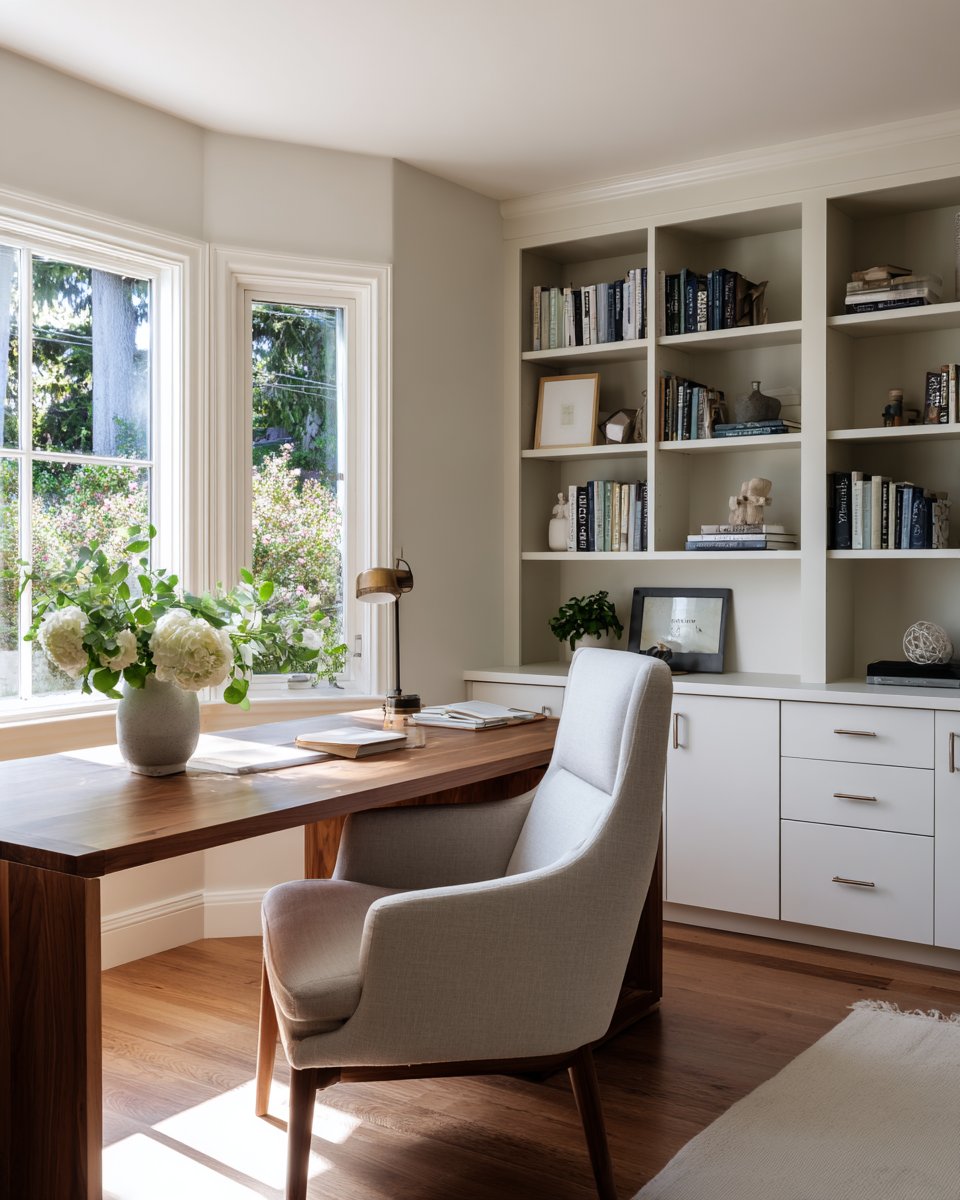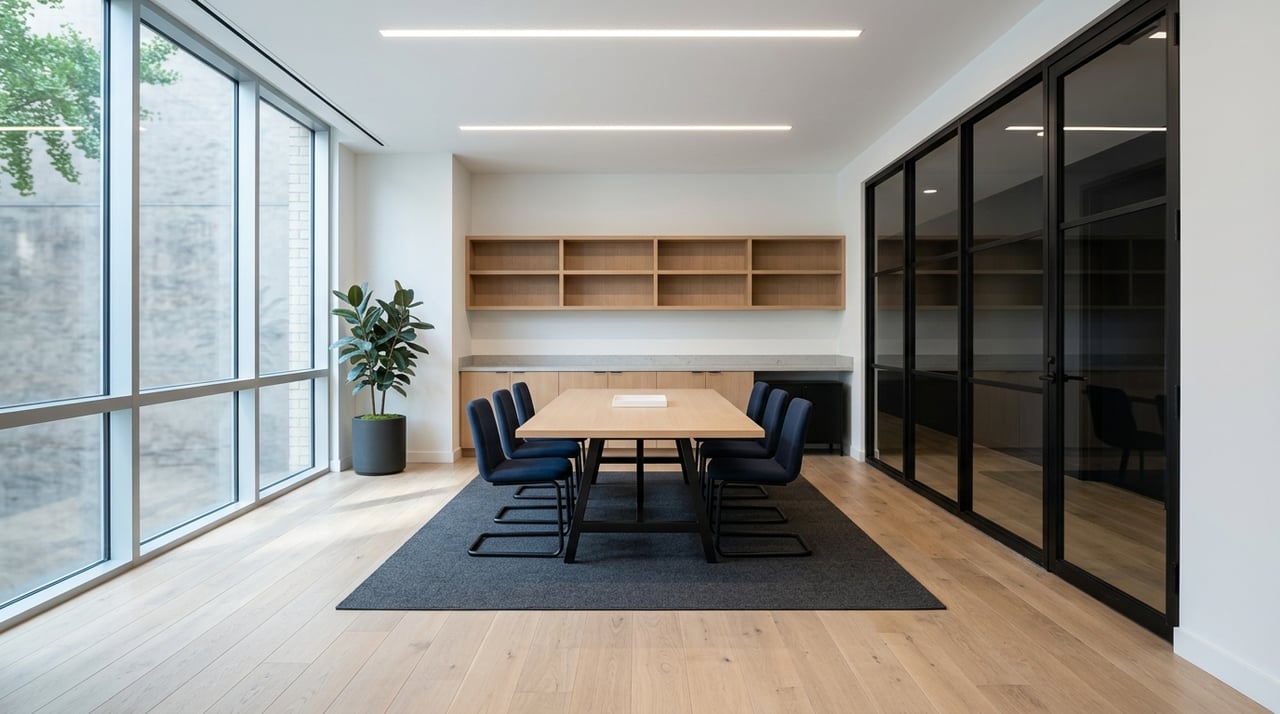
Need a polished office near Rittenhouse without overcommitting on size or cost? You are not alone. Many firms want the image, access, and convenience of this part of Center City, but the search can get complicated fast when small suites move quickly, expense structures vary, and build-out timelines depend on city approvals. This guide will help you understand what boutique office space near Rittenhouse really looks like, how to evaluate your options, and how to move with confidence. Let’s dive in.
Why Rittenhouse Stays Competitive
Rittenhouse-adjacent office space is not just a prestige play. It is a selective, quality-driven market where location, building condition, and day-to-day convenience can influence how quickly a suite gets leased.
Greater Center City supports 309,000 jobs, and office leasing activity reached a six-year high in 2025, with deal volume up 10% from the prior year. At the same time, more than 2 million square feet of challenged office space is on a path to residential conversion, while downtown vacancy remains at 20.4%.
That combination creates an important balance for tenants. You may have negotiating room in parts of the market, but the best-positioned small suites near Rittenhouse can still attract attention quickly.
Vacancy and rent by submarket
Cushman & Wakefield’s Q1 2026 data for Philadelphia’s CBD shows vacancy near 20% overall. West of Broad posted 19.9% vacancy with Class A asking rent at $34.04 per square foot, while East of Broad showed 21.4% vacancy and $32.68 per square foot.
For a tenant targeting Rittenhouse, that means rent is only one part of the decision. The right block, building image, suite condition, and walking environment can matter just as much as the quoted rate.
Renewals still dominate
In Q1 2026, renewals totaled about 235,000 square feet, nearly double new leasing at just under 120,000 square feet. Trophy assets captured 57% of new leasing, and trophy vacancy stayed below 10% for the tenth straight quarter.
The takeaway is simple. If you want the cleanest, best-located boutique suite, you need to be ready to act. If you are open to older or partially improved space, you may find more room to negotiate.
What Counts as Boutique Office Space
Near Rittenhouse, boutique office space usually means smaller partial-floor suites, full floors in mid-rise buildings, or a compact footprint within a larger Class A tower. It is less about a formal label and more about scale, layout, and the experience your team and clients will have in the space.
Current listings show that boutique options can start surprisingly small. At 1845 Walnut Street, available suites include spaces as small as 901 and 1,259 square feet, along with larger partial-floor options.
On the other end of the boutique range, 1624-1628 Locust Street reflects the Class B side of the market, with current 7,351-square-foot floors offered as partial build-outs. At 1760 Market, availability ranges from 1,016 square feet to more than 9,152 square feet, showing how small-to-mid-sized tower product can still feel boutique.
A practical size range
Based on current inventory examples near Rittenhouse, boutique office space often falls into these ranges:
- Roughly 1,000 to 4,500 square feet for a partial-floor suite
- About 7,000 to 10,000 square feet for a full boutique floor
- Smaller suites within larger towers for firms that want Class A image without taking a large block
Large nearby towers can still work for boutique users. For example, 2000 Market Street has a typical floor size of 26,265 square feet, but current availabilities begin at 1,959 square feet.
How Small Can a Rittenhouse Office Be?
If you assume Rittenhouse office space starts at a few thousand square feet, the current market says otherwise. Sub-1,500-square-foot suites are available in Class A product.
That matters if you are a law firm, advisory practice, therapist group, consulting firm, wealth manager, or other professional user that wants a strong address without paying for more space than you need. It also helps firms that are upgrading image while keeping occupancy costs in check.
Look Beyond Headline Rent
One of the easiest mistakes in boutique office leasing is comparing spaces by asking rent alone. Near Rittenhouse, the lease structure can materially change what you actually pay each month.
Some current listings in the area use modified gross lease structures, and some pass through electrical and cleaning costs. Two suites with similar face rents can have meaningfully different total occupancy costs once those items are added.
What to compare
As you review options, focus on the full cost picture:
- Base rent
- Lease structure, including modified gross terms
- Electrical charges
- Cleaning costs
- Tenant improvement needs
- Furniture or cabling reuse potential
- Move-in timeline
This is where a disciplined review matters. A suite that looks cheaper on paper may be less attractive once you factor in work needed to occupy it.
Is the Market Tenant-Friendly?
The honest answer is mixed. Overall vacancy near 20% gives tenants some leverage, but trophy space is tighter and tends to move faster.
That means your leverage depends on what kind of product you want. If you are focused on the tightest trophy inventory, you may have fewer opportunities to press for major concessions. If you are open to older or partially improved space, you may have a stronger chance to negotiate tenant improvement dollars, free rent, renewal options, or expansion and contraction language.
Why selectivity matters
Center City District has noted that the pedestrian and amenity quality between Rittenhouse Row and the office district can influence deals. In practical terms, not every nearby block delivers the same experience for clients, employees, or daily operations.
So the real question is not just whether the market favors landlords or tenants. It is how much friction you are willing to accept in exchange for location, image, and access to the Square, transit, and nearby dining.
What to Have Ready Before Touring
If you are targeting a small, well-located suite, preparation can be a real advantage. In a renewals-heavy and quality-driven market, landlords often respond best to tenants that present a clean, credible process.
Landlords and tenants commonly use a letter of intent to outline main business terms before the lease is drafted, and some landlords request financial statements with the LOI. Legal guidance also emphasizes that the LOI should identify the exact legal tenant entity and should not be treated as binding until a lease is fully executed.
Your pre-tour checklist
Before you start touring, have these items defined:
- Your square footage range
- Your intended use of the space
- Your decision-makers
- Your exact legal entity name
- Recent financials or other proof of credit strength
- A realistic target move-in date
- A backup option if your first choice moves quickly
Speed plus clarity can help you compete for the best boutique suites. It also reduces wasted time once negotiations begin.
Timing Matters More Than You Think
In Philadelphia, leasing the space is only part of the process. Your timeline may also depend on licensing, zoning, permits, inspections, and occupancy approval.
The City of Philadelphia states that any business operating in the city must have a Commercial Activity License. The city describes it as a free, lifetime license that can be obtained online or in person.
If your project requires a zoning application, the city requires that application to include the complete scope of work and, if the applicant is a tenant, the executed lease agreement. That means some approvals cannot move forward until the lease is signed.
When zoning can delay a move
If your intended use is not permitted as of right, the city says you must first receive a zoning refusal and then appeal to the Zoning Board of Adjustment. A public hearing is then scheduled within several months.
For a business with a hard opening date, that can significantly affect planning. It is one of the clearest reasons to think about post-lease approvals before you finalize the space.
Fit-out and inspections
Tenant fit-out can trigger multiple permits and inspections. Philadelphia states that contractors schedule inspections at key points, and the final inspection closes out the permit and confirms compliance. After approval, the Certificate of Occupancy or Certificate of Approval is issued.
The city also emphasizes that permit work should be planned as one sequence that includes zoning, permits, inspections, and licensing. Treating those steps separately can create avoidable delays.
A 2026 code change to watch
Philadelphia is preparing to adopt the 2021 I-Codes, with state and local modifications, effective July 2026. The city states that all new permit applications starting July 1, 2026 must comply.
If you are planning a late-2026 move, make sure your architect, contractor, and permit timeline are aligned with that change. Even a well-negotiated lease can run off schedule if the build-out team is not planning around the current code path.
A Smart Strategy for Securing Space
The strongest boutique office searches usually start with discipline, not volume. Instead of touring everything near the Square, define your must-haves first and sort buildings by business function, not just by address.
A simple framework can help:
- Set a real square-footage range.
- Decide what matters most: image, layout, speed, or cost.
- Compare total occupancy cost, not just asking rent.
- Confirm your legal entity and financial package early.
- Build a post-lease permit and fit-out timeline before you commit.
That approach fits how Commercial Partners SERHANT views commercial real estate. Office space is business infrastructure. The lease, the build-out, and the timeline all affect how your company operates after the deal is signed.
If you are considering boutique office space near Rittenhouse, the right strategy is usually not chasing every listing. It is identifying the spaces that fit your brand, workflow, and timeline, then moving decisively when the right suite appears.
When you want practical guidance on office leasing strategy in Greater Philadelphia, connect with SCRE PA, LLC d.b.a. Commercial Partners Serhant for clear advice, disciplined negotiation, and help aligning your space decision with your business goals.
FAQs
How small can boutique office space near Rittenhouse Square be?
- Current inventory shows Class A suites under 1,500 square feet, including examples as small as 901 square feet.
Is office leasing near Rittenhouse Square tenant-friendly or landlord-friendly?
- It is mixed. Overall vacancy near 20% gives tenants some leverage, but trophy space remains tighter and often moves faster.
What should a business prepare before touring office space near Rittenhouse?
- You should have a defined square-footage range, intended use, decision-makers, exact legal entity name, recent financials or credit support, and a target move-in timeline.
Why does build-out timing matter for Philadelphia office space?
- Tenant fit-out can require zoning review, permits, inspections, occupancy approval, and a Commercial Activity License before the space can be used.
Do larger buildings near Rittenhouse work for boutique office tenants?
- Yes. Large Class A towers can still offer smaller partial-floor suites, including availabilities that begin below 2,000 square feet.
What lease cost details matter most for boutique office space near Rittenhouse?
- You should compare total occupancy cost, including base rent, modified gross terms, electrical charges, cleaning costs, and any improvement needs, not just the headline asking rent.